
Latest
The horse

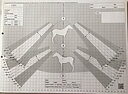
These are the parts of the horse that we analyze to help you in the right direction.
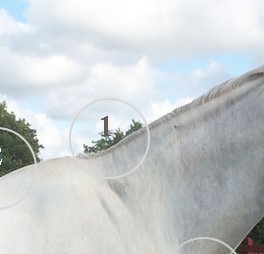
1. The shape of the neck areveals how the horse carries his front and also the horse's balance between the front and the rear.
It shows how the shoulders move and how well the saddle functions in the front and under the position of the stirrupbar.
It shows how the shoulders move and how well the saddle functions in the front and under the position of the stirrupbar.
The neck shall have a smooth shape without any flat or swollen areas. From the wither the neck shall continue upwards without a dip in front of the wither.
It often indicates that the front works a bit harder than it should.
The horse shall have smooth muscles in front of the shoulders and the front part of the neck shall not have bigger muscles than the base of the neck.
It often indicates that the front works a bit harder than it should.
The horse shall have smooth muscles in front of the shoulders and the front part of the neck shall not have bigger muscles than the base of the neck.

2. The height, length and shape of the wither indicates how well the horse pushes in the front and how the load of the saddle and rider affect.
A short wither with a sharp angle towards the back and a deep back shows that the horse probably can push the chest more upwards and change its shape.
A wither with a narrow base or with swelling indicates that the saddle has been too narrow.
A short wither with a sharp angle towards the back and a deep back shows that the horse probably can push the chest more upwards and change its shape.
A wither with a narrow base or with swelling indicates that the saddle has been too narrow.
We can help you both to assess the current situation as well as how you can prepare your horse for saddle fitting by pushing up in the front.

3. Neck, shoulder and front leg. The entire underside of the front of the horse is connected
to the balance of the horse. If a horse stands over his legs, the legs going backwards,
it is a sign that the horse works with the weight in the front with less ability to use the break from behind.
The shoulders are more straight and the point of the shoulder are low and the front sinks down between the front legs.
The lower neck must work more to compensate the non excisting lift in the front and the front leg can also show a large upper muscle.
Combined with neck / wither / back we can get an indication that the rear part of the horse needs to restrain better
to increase the horse's ability to use its front push.
We will help you to start rebalancing directly after the first consultation
which can be booked here on our webpage, see page Our services.
to the balance of the horse. If a horse stands over his legs, the legs going backwards,
it is a sign that the horse works with the weight in the front with less ability to use the break from behind.
The shoulders are more straight and the point of the shoulder are low and the front sinks down between the front legs.
The lower neck must work more to compensate the non excisting lift in the front and the front leg can also show a large upper muscle.
Combined with neck / wither / back we can get an indication that the rear part of the horse needs to restrain better
to increase the horse's ability to use its front push.
We will help you to start rebalancing directly after the first consultation
which can be booked here on our webpage, see page Our services.

4. The thoracic spine is where you sit. The shape, inclination, length and tension in the back shows
how it is loaded and how the horse carries or compensates and rotates.
Most problems with the back comes from the load on the back. It moves too much,
puts more weight on one side than the other or is in the wrong position on the horse's back, usually too far back behind center of gravity.
We compare shape, left & right side and analyze both horse and rider to understand what causes the problems.
We then change the balance so that the back gets the best possibilities to stabilize its own movement and to be able to carry a rider.
Most problems with the back comes from the load on the back. It moves too much,
puts more weight on one side than the other or is in the wrong position on the horse's back, usually too far back behind center of gravity.
We compare shape, left & right side and analyze both horse and rider to understand what causes the problems.
We then change the balance so that the back gets the best possibilities to stabilize its own movement and to be able to carry a rider.

5. Lumbar spine / pelvis / croup / hamstrings.
The muscles in the lumbar spine can be concave or swollen which indicate on
how the horse uses his pelvis and his hind break and how the horse is affected in the back of carrying a saddle and a rider.
how the horse uses his pelvis and his hind break and how the horse is affected in the back of carrying a saddle and a rider.
The croup can have even muscles all over or have a combination between really big and almost non excisting muscles which creates unevenness.
This shows how the hindleg, hock, knee and pelvis cooporate under load, landing and take off.
This shows how the hindleg, hock, knee and pelvis cooporate under load, landing and take off.
The hamstring muscles on the back is often really large on horses that uses them more than they should.
These horses often lack muscles on the croup and on the sides of the thighs.
The angle of the pelvis and the placement of the hindlegs indicates how the horse has been shaped after the way hos body is working.
We do an analysis of the whole picture and you have the possibility to learn more about your horse and the biomechanic aspects we are working with.
These horses often lack muscles on the croup and on the sides of the thighs.
The angle of the pelvis and the placement of the hindlegs indicates how the horse has been shaped after the way hos body is working.
We do an analysis of the whole picture and you have the possibility to learn more about your horse and the biomechanic aspects we are working with.
When you take a picture and book a cosultation or saddle fitting, you will have the possibility to connect your ridden feeling with the way your horse uses his body.
You will be able to start working to achieve a change right away and within 14-30 days you will be able to see a big change in the horse.