
Latest
You are unique
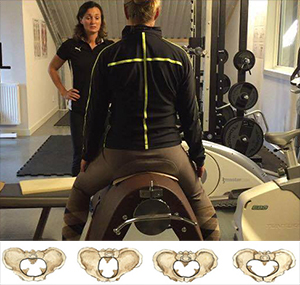
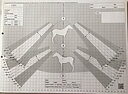
We have measured over 3500 riders.
We know now that by measuring first, we shorten the time it takes to figure out what you need, we avoid silly problems
and we get to try exactly the kind of saddle sizes and shapes, that are in line with your unique measures.


There is a lot of focus on how you hold your head and neck while riding.
We found that if your pelvis is supported in neutral, it helps the position of your neck,
through the back and your breastbone will also come up and forward.

2. Your shoulders tell us about your laterality

All of us have a stronger side, and it has a big effect on shoulder and ribcage, as well as our strength in the sides,
unless we make an effort to actually take control. If you can control your shoulders on your back, (so they don’t wing out or go forward)
you will get better contact with the horses mouth. You will have less lateral issues and a straighter horse.
Let our fitters do the analysis and show you what you can do and how it matters.

3. Ribcage and breastbone

To sit square with your weight distributed evenly over both seatbones, you need to be vertically balanced and centered in your ribcage.
Let our saddlefitter help you to experience and find your center so you can feel how it matters in your riding.

This forces you to use a lot of power and energy without getting the results you are aiming for.
or even thought about before. Once you master them, you will find that you can impact your horse carriage and straightness with so much less effort.
The turnaround time for these muscles to become easy to use, is about 2 weeks. Making them strong and reliable takes about 3-6 months,
depending on your physical status.

5. The hips

So if a rider is in a too wide seat, the hip joints will be compromised and tension is the result. If a rider is in a too narrow seat,
the rider will tense the hips to stop their pubic area from hitting the saddle and this tension will cause bouncing and other problems.
Only when the saddle-shape is not forcing you or causing pain, will your body agree to relax. This is when you can start to train the weaker side,
or weaker glute, to become more even. Let our fitter analyze you, so that you know what you really need and
can get the exact help that you may need to sort out old injuries, pains and weaknesses.
The saddle will resolve some of your issues, while other issues will need more work.

You can not produce a seat with tension, going against your anatomy.
while the last 10% may have combinations of shapes or medical conditions, that we are not able to accommodate.
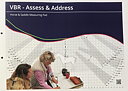
During the rider assessment you will be able to find out what you need to know to move towards painfree riding.

The needs for soles are common but rarely used in the riding boots. Your feet stabilize your knee, hip and each side of your body.
Pain in feet or ankles, as well as sprained ankles cause instability and compensatory movement.
Many riders unload one foot or use one foot with a deeper compressed or angled ankle.
You may even look at a photo to see how your left and right foot are not at all equal, before seeing us.
We know one thing for sure:
Women make up to 80% of all riders. They have been told by men how to sit. The men learned mainly from the military end and
the rules they learned may be correct but they should not be used to produce a seat by tension. They should be used to see if the person sits
like that naturally in their saddle. If not, the saddle needs the adjusting and then the rider may need some training. Not the other way around.
If you experience pain while trying real hard, it is time to stop. There is nothing wrong with you. You are simply poorly matched to what you are sitting on.
A simple rider analysis will open up a new world for you.
Our ambassador and VBR coach Thereza Eriksson at Hylinge Häst shows what happens
when the rider sits in vertical balance.